Water Damage Repair in Marietta, GA
Water damage repair is the second half of a water loss: the drywall, flooring, baseboard and paint work that puts a room back together once it is dry. The order matters. Our Marietta crews handle the emergency and drying side 24/7, document the damage for your claim, and give you a clear picture of what the repair phase will involve before anything is closed back up.
Quick Answer
Water damage repair in Marietta is the work after the water is out: confirm the structure is dry to documented readings, remove what cannot be saved, then repair or replace drywall, insulation, flooring and finishes. Repairs done on wet materials fail, so drying comes first. Call (678) 835-2797 and we start with extraction and a moisture map of the home.
Repair Starts With the Dry-Out, Not the Drywall
Why Rebuilding Too Early Backfires
New drywall, paint and flooring sealed over damp framing trap moisture behind the finish. The usual result is a musty smell, paint that bubbles, floor boards that cup, and mold growing where nobody can see it. Georgia's humidity makes this worse because wet materials have nowhere to go. Repair is scheduled from the drying log: when readings in the studs, subfloor and drywall match the dry reference for your home, the rebuild can begin.
Tear-Out Is Part of Repair, Not a Separate Event
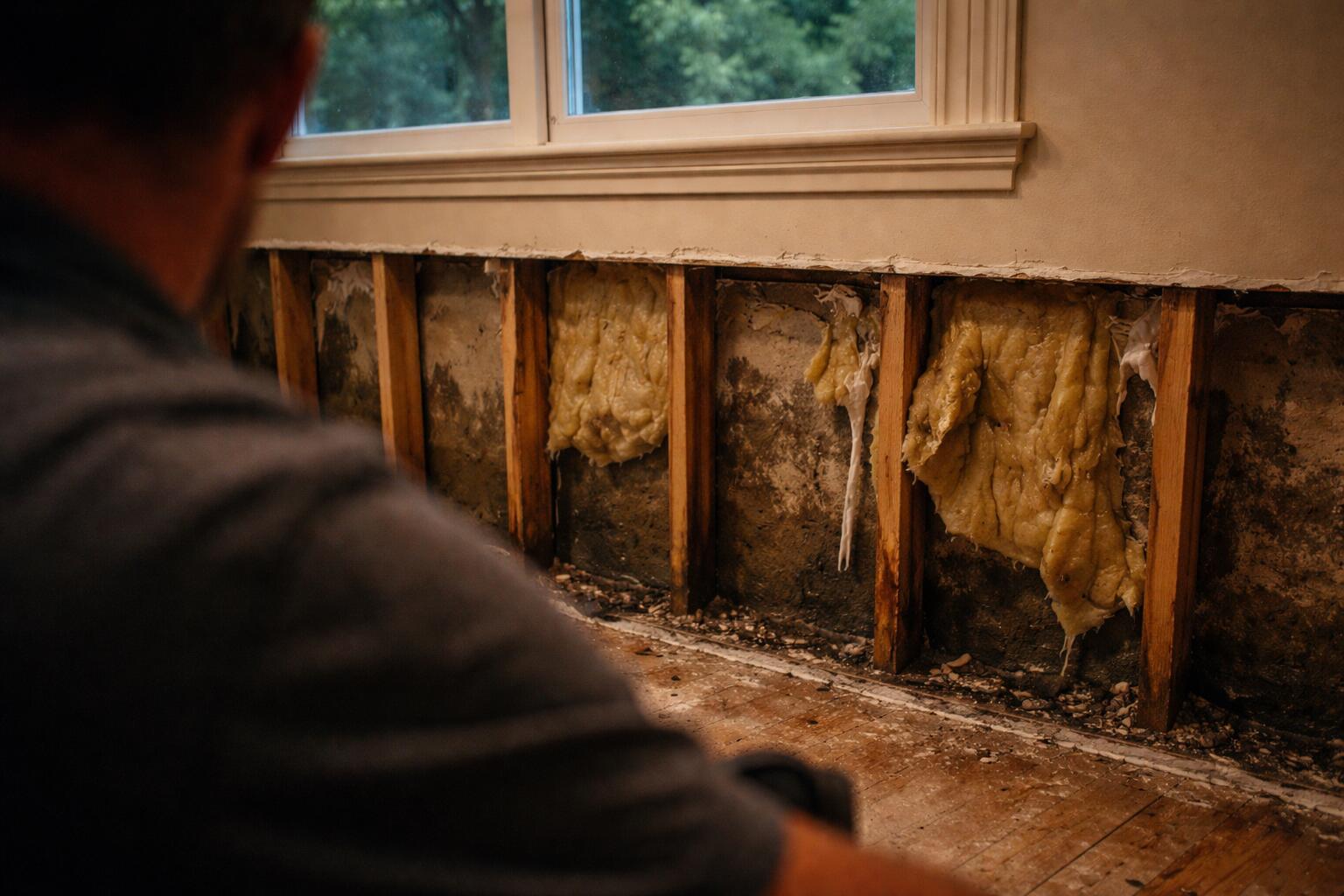
Some materials do not come back from a soaking. Saturated insulation, carpet pad and drywall that has swelled or sat in dirty water are typically cut out so the cavity can dry and so the new work goes onto sound material. Cutting a flood line a foot or two above the water mark is common because moisture wicks upward. We mark and photograph what comes out, which also gives your insurer a record of the scope.
What Usually Gets Repaired After a Water Loss
Walls, Ceilings and Insulation
Drywall that stayed wet or stained is replaced in sections, then taped, textured and primed to match. Wet insulation in an exterior wall or attic is pulled and replaced because compressed, wet insulation stops insulating. Ceilings that sagged under trapped water are opened to release it and then re-hung. Where water ran inside a wall cavity from a supply line or appliance, the opening is sized to let the cavity dry and then closed in neatly.
Floors Over Slabs, Subfloor and Crawl Spaces
Marietta homes range from slab and crawl space ranches to finished lower levels on sloped lots, and each floor reacts differently. Engineered and laminate flooring often swell at the seams and are replaced. Solid hardwood is sometimes saved with drying mats if it has not cupped past recovery. Tile usually survives, but the subfloor beneath it still has to be checked. Carpet and pad that took clean water can sometimes be dried; anything that touched contaminated water is replaced.
Trim, Cabinets and Paint
Baseboard and door casing wick water and swell, so they come off during drying and go back on once the wall behind them is closed. Cabinet toe kicks and bases that delaminate are replaced or repaired. Finish work is the last step, after drywall compound has cured, so the new paint lands on a stable surface instead of a damp one.
Repair, Restoration and Mitigation: Who Does What
Three Words for One Job
Mitigation is the emergency work that stops the damage from spreading: water extraction, tear-out of unsalvageable material and drying. Restoration usually means the full path back to pre-loss condition, and repair is the rebuild portion of that path. Homeowners search for all three, and on a real loss they overlap. What matters is that someone owns the sequence so drying is finished before closing walls.
Where a Separate Contractor Fits
Plumbers fix the leak, electricians clear wet outlets and wiring, and a roofer handles the roof. We coordinate the water side so those trades work on a dry, documented structure. Ask any contractor for their scope in writing, including what is replaced and what is only dried, so your insurance estimate and the actual work line up.
Repair Work and Your Insurance Claim
Document Before Anything Is Removed
Claims run on evidence. We photograph the damage, the moisture readings and each material removed before disposal, and keep the drying log with the daily readings. That documentation supports the repair scope your adjuster reviews. Coverage depends on your policy and the cause of the loss, which only your carrier can determine. We do not decide coverage, but we make sure the record of the water damage is complete.
Keep Your Receipts and the Drying Log
Keep a folder with the dry-out report, photos, material lists and any invoices for temporary repairs. If the adjuster asks why a section of wall was replaced instead of dried, the readings answer it. A clear scope also helps if the repair is handled by a builder or handyman of your choosing.
Frequently Asked Questions
How long should I wait before repairing water damage?
Until the structure is dry to documented readings. Drying typically takes several days, and repairs start after the meters confirm the framing, subfloor and drywall are at dry standard. Rebuilding earlier can trap moisture and cause mold.
Do you replace drywall and flooring or only dry them?
We start with drying and mitigation, and tell you honestly which materials can be saved and which cannot. Materials that stayed wet too long or touched contaminated water are usually removed. The scope is explained before work begins.
Can water damaged hardwood floors be repaired?
Sometimes. If the boards have not cupped or buckled beyond recovery, drying mats and dehumidifiers can save solid hardwood. Engineered and laminate flooring usually swells at the seams and is replaced.
Will my homeowners insurance pay for water damage repair?
It depends on your policy and the cause of the loss. Sudden events like a burst supply line are commonly covered, while gradual leaks and flooding often are not. Your carrier decides coverage; we document the damage and the drying so the claim has the evidence it needs.
What if I only see a small stain on the ceiling?
A stain usually means more water is trapped above it than shows below. Call before painting over it. A moisture reading tells us whether the stain is old and dry or still wet.
Related Services and Areas We Cover
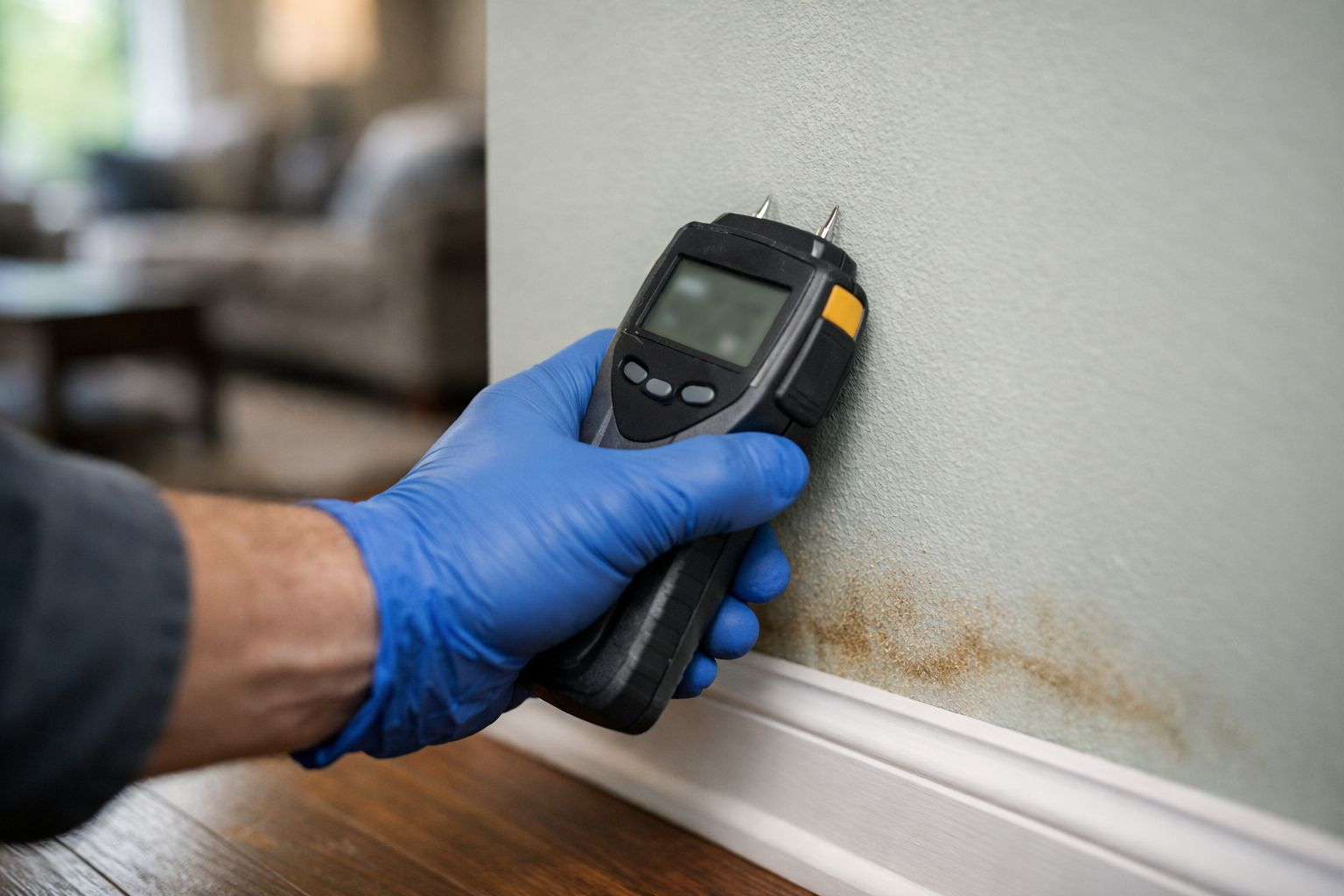
Moisture inspection — Marietta, GA
Water damage in your home right now? Call for 24/7 response and a clear plan from dry-out through repair across Marietta and Cobb County.
Free estimates · Crews dispatched 24/7
📞 Call (678) 835-2797Get a Free Estimate
No obligation · Crews available 24/7
Takes 60 seconds · No obligation
Related Articles
Why Choose Us?
- 24/7 Emergency Dispatch
- Truck-Mounted Extraction
- Moisture-Metered Drying
- Insurance-Ready Documentation
- Free Estimates
- Serving Cobb County and Beyond