
Storm Damage Restoration in Marietta, GA
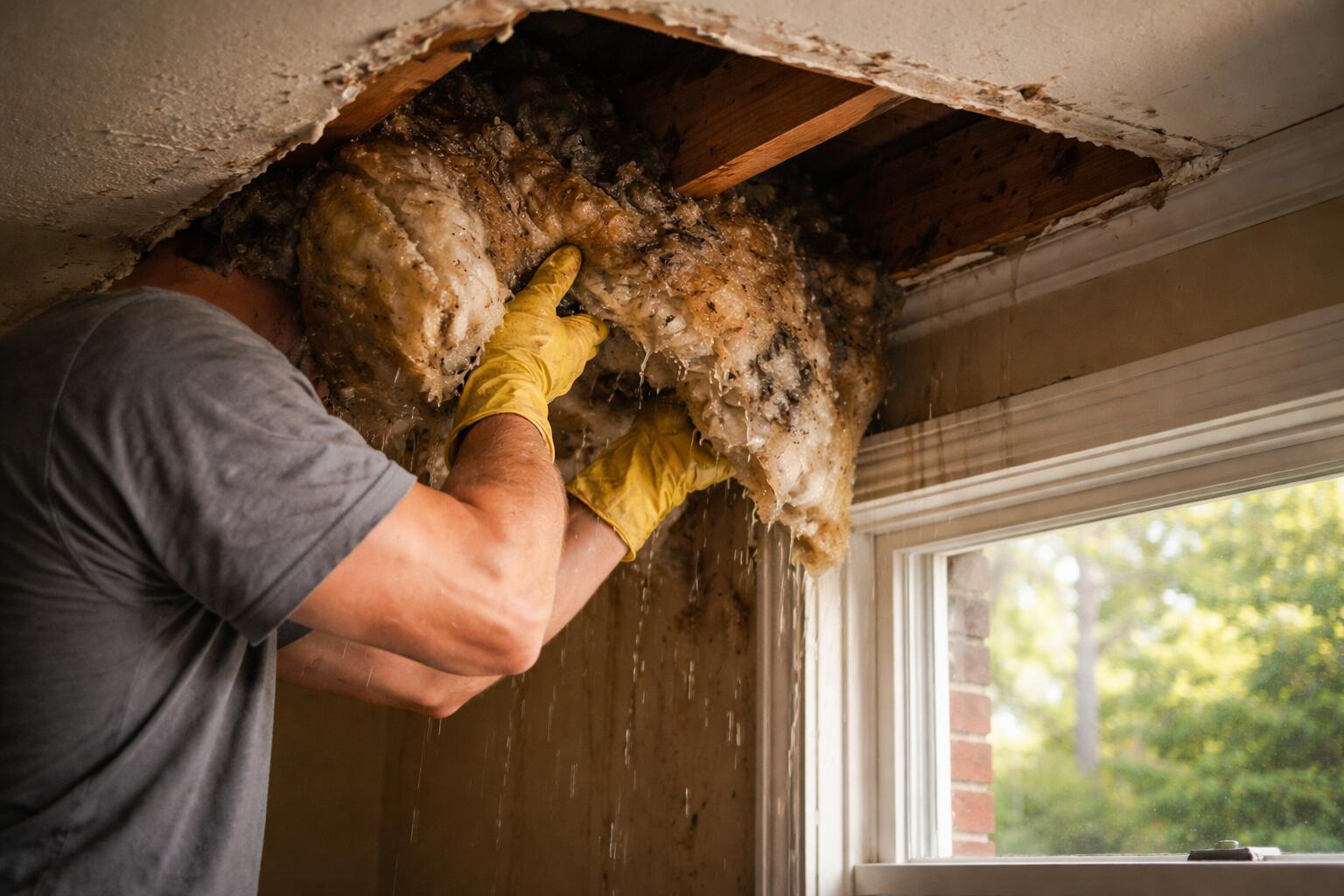
Storm damage restoration is the water side of a storm loss: rain that came through a damaged roof, a failed window seal, a gutter overflow or a limb through the siding. Water from above behaves differently than a flooded yard, because it soaks insulation and ceilings first. Our Marietta crews respond around the clock, dry the structure to documented readings, and record the damage for your insurance.
Quick Answer
Storm damage restoration in Marietta covers the water that gets into a home during severe weather through the roof, windows, siding or a tree impact. We extract water, open and dry wet ceilings, walls and insulation, and document the entry point for your claim. Call (678) 835-2797 any hour; a crew is dispatched across Marietta and Cobb County.
Water From Above Is a Different Problem
Ceilings and Attics Go First
When wind drives rain under shingles or through a gap where a limb hit the roof, the water lands on insulation and drywall before it reaches a floor. Wet insulation holds water against the ceiling and can sag a drywall panel within hours. By the time a stain shows, the attic side can be soaked well beyond it. We check the ceiling, attic and wall cavities with moisture meters instead of judging by the stain alone.
Wind-Driven Rain at Windows, Doors and Siding
Severe Georgia storms push rain sideways. Water gets behind siding, around window frames and under door thresholds, then travels down inside the wall. It may not appear until the baseboard stains or paint bubbles days later. After a storm, we meter the walls beneath any window or door that showed leakage so hidden moisture is found while it can still be dried.
What We Do After a Storm Loss
Stop the Water, Then Dry the Structure
We extract standing water, remove saturated insulation and ceiling material that cannot dry in place, and set up air movers and dehumidifiers matched to the wet area. Roof or window openings need a roofer or glazier to close them; we coordinate around that work so the interior is not left wet while the exterior is waiting on repair. Equipment is monitored daily until readings reach dry standard.
Photograph the Entry Point and the Damage
Storm claims depend on showing how the water came in. We photograph the visible damage, the affected rooms and the moisture readings before anything is removed, and keep the drying log. Whether the loss is covered depends on your policy and your carrier's decision, but a complete record gives that decision something solid to rest on.
Storm Water Versus Flood Water
Know Which One You Have
Rain that comes through the roof or a window is treated differently from water rising in from the yard or a creek. Rising water is considered contaminated and calls for flood cleanup, with materials removed and sanitized. Water entering from above is often cleaner at first, which can allow more materials to be dried in place if it is handled quickly. Tell the dispatcher which applies when you call. If both happened, we handle both.
Tree Impacts and Debris
A fallen limb or tree can open the roof, break a window or crack a wall. Making the structure safe and watertight comes first, and the tree and roof work belong to the right contractors. We handle the water that came in: extraction, drying and documentation. If the electrical panel or outlets got wet, have them checked before restoring power to the affected area.
Protecting Your Home After the Storm Passes
Safe First Steps
Stay clear of any room where the ceiling is bulging or sagging with water, and keep away from wet areas near outlets or light fixtures. Move small items out of the wet area, place buckets under active drips, and photograph everything before cleanup. Do not climb on a storm-damaged roof. Call us once it is safe, then your insurance carrier.
Why Speed Matters After Rain
Wet insulation, drywall and framing begin to grow mold within a day or two in Georgia's humid weather. Getting air movers and dehumidifiers running early limits how much has to be torn out. Long-term protection comes from repairing the entry point, so schedule roof and window repairs promptly.
Frequently Asked Questions
Does storm damage restoration cover roof repair?
No. We handle the water that came into the home: extraction, drying and documentation. Roof and window repairs belong to a roofer or glazier, and we coordinate so the interior dry-out continues in the meantime.
Is storm water considered flood water?
Not always. Rain entering through the roof or a window is different from water rising from the yard, which is treated as contaminated. We identify the source and handle each correctly.
Will my insurance cover storm water damage?
Wind-driven rain through storm damage is often covered under homeowners policies, while rising surface water is generally a separate flood coverage matter. Your carrier makes the decision. We document the damage and the entry point either way.
How fast should I call after a storm leak?
As soon as it is safe. Wet insulation and drywall can start growing mold within a day or two, so earlier drying means less tear-out.
I see a ceiling stain after the rain stopped. Is it urgent?
Treat it as active until a moisture reading says otherwise. Water often pools above the stain, and a bulging ceiling should be avoided and released safely by a professional.
Related Services and Areas We Cover
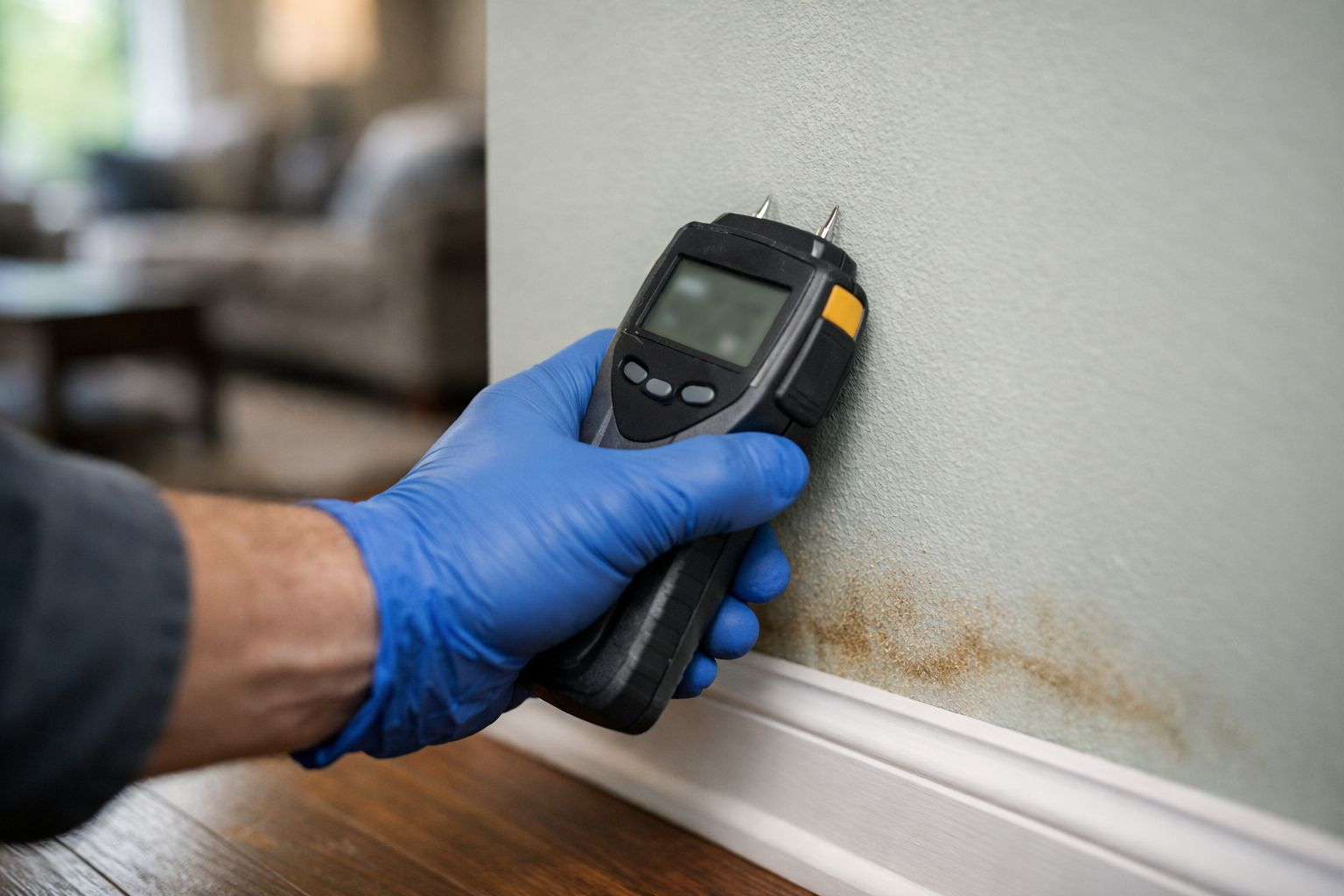
Moisture inspection — Marietta, GA
Storm water in your home right now? Call for 24/7 storm damage restoration across Marietta and Cobb County.
Free estimates · Crews dispatched 24/7
📞 Call (678) 835-2797Get a Free Estimate
No obligation · Crews available 24/7
Takes 60 seconds · No obligation
Related Articles
Why Choose Us?
- 24/7 Emergency Dispatch
- Truck-Mounted Extraction
- Moisture-Metered Drying
- Insurance-Ready Documentation
- Free Estimates
- Serving Cobb County and Beyond