Water Mitigation & Structural Drying in Marietta, GA
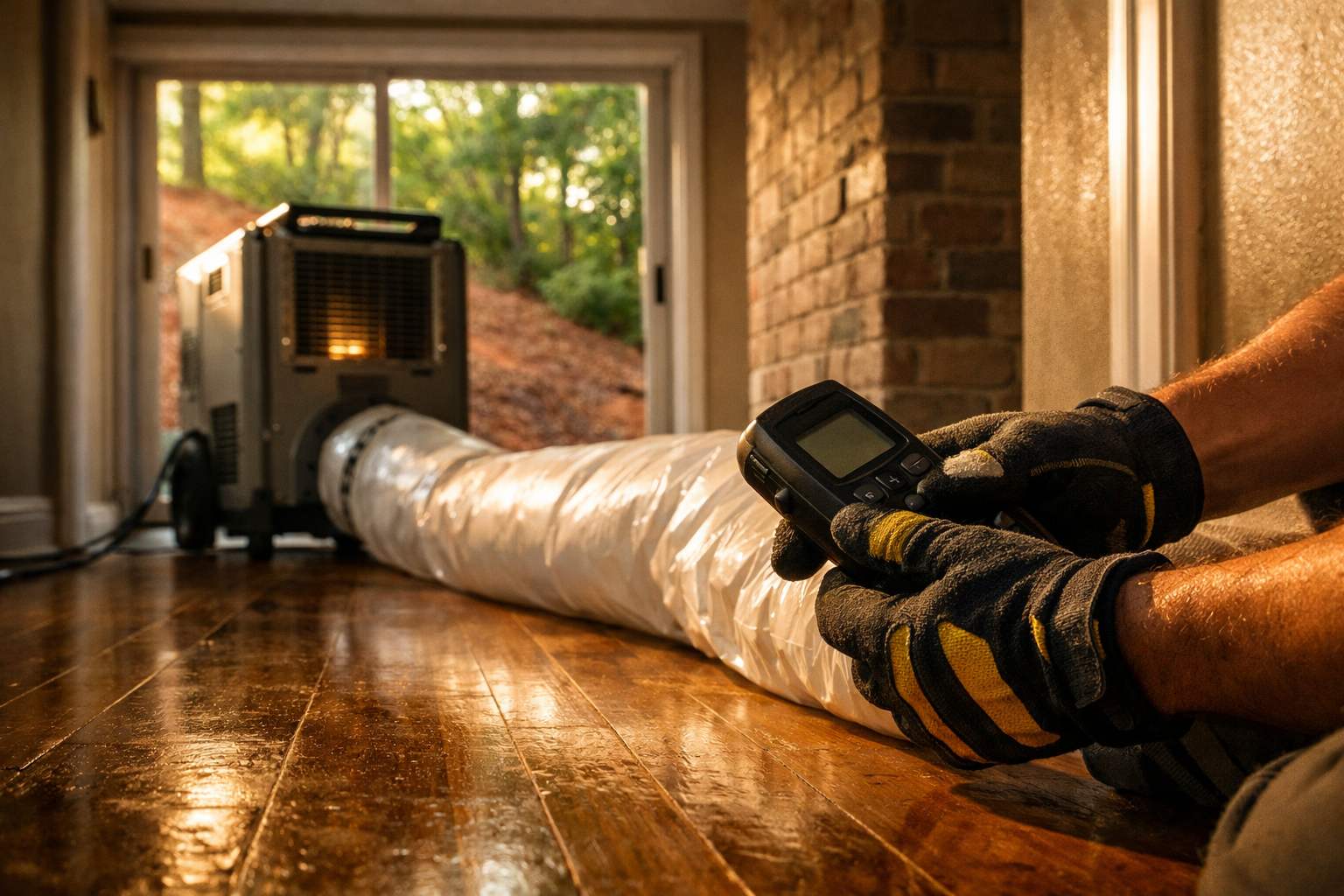
Structural drying is the controlled removal of moisture from a building's materials — walls, subfloors, framing — using calculated placement of commercial air movers and dehumidifiers, verified with daily moisture readings. It typically takes several days and is the step that determines whether a water-damaged home truly recovers or quietly develops mold and warped floors months later.
Quick Answer
Water mitigation in Marietta is the work that stops a water loss from getting bigger: extract the water, then dry the walls, subfloor and framing with commercial air movers and dehumidifiers until daily meter readings match dry standard. Call (678) 835-2797 any hour; drying should start the same day the water comes out.
Why "Looks Dry" Is How Homes End Up With Mold
The Gap Between Surface-Dry and Actually Dry
After the standing water is gone, a dangerous illusion sets in: surfaces feel dry, the fans have run for a day, and life wants to go back to normal. But drywall, wood framing, subfloor, and insulation hold moisture invisibly for days or weeks — and in Georgia's humidity, they give it up slowly or not at all without help. Moisture you can't feel is what buckles hardwood a month later, delaminates subfloor, rusts fasteners, and feeds the mold colony that announces itself as a musty smell next season.
Instruments, Not Opinions
Structural drying exists to close the gap between looks dry and is dry — and to prove the difference with meters, not guesswork. Every material type has a dry standard: the moisture content that matches unaffected reference materials in your own home. Hitting documented dry standard is what closes out a mitigation properly for you and your insurance carrier, and it's the difference between a restoration and a fan rental.
How Professional Drying Actually Works
The Science, Briefly
Drying is a controlled exchange: air movers evaporate moisture off wet materials into the air, and dehumidifiers pull that moisture out of the air and out of your house. Get the balance wrong — too much airflow, too little dehumidification — and you're just relocating moisture around the structure. Our technicians calculate equipment loads from the wet square footage, the materials involved, and the humidity conditions that day.
Placement That Follows the Water
Meters tell us where the moisture actually is — often two rooms past the visible damage. Equipment goes where the readings say, including inside wall cavities through targeted openings, under cabinets, and into crawl spaces. Specialty setups handle the hard cases: drying mats that pull moisture down through hardwood boards, and injection systems that dry wall interiors without tear-out. Controlled small openings now prevent wholesale demolition later.
Daily Monitoring to Dry Standard
Every day, we meter the same points and log the readings. Materials are compared against dry-standard targets for their type — hardwood and plaster run slower than drywall and carpet. Equipment moves as sections come dry, and it all comes out only when the numbers say done, leaving a documented record your insurance carrier can see. You'll see the readings too, so the timeline is never a mystery.
Drying in Georgia's Climate
Why Closed Drying Beats Open Windows Here
The instinct to air the house out backfires in Georgia most of the year. Outdoor air in our climate often carries more moisture than the air inside a drying home — opening up feeds the dehumidifiers an endless buffet and stalls your structure's progress. We dry closed, controlled, and measured. It's less intuitive and considerably faster, and it's exactly why household fans alone fail in a Marietta summer.
What Determines Drying Time
How saturated the materials got, how long water sat before extraction, what the materials are, and the weather we're fighting all shape the timeline. Most homes reach dry standard in a matter of days with commercial equipment; deeply saturated or long-neglected losses take more. Shutting equipment down overnight stalls evaporation and can add days — the airflow you hear is the drying you're paying for.
What Water Mitigation Means, and What Comes After
Mitigation Versus Restoration
Mitigation is the emergency phase: stop further damage by removing water and drying the structure. Restoration is everything that rebuilds afterward, such as replacing drywall, pad, trim or flooring that could not be saved. The two are billed and documented differently, and good mitigation shrinks the restoration list. Structural drying is the longest and most technical part of mitigation, which is why it gets its own page here.
What Each Day of a Dry-Out Looks Like
Day one is extraction, moisture mapping and equipment placement. On the following visits the technician meters the same marked points, logs the readings, and adjusts equipment as sections come dry. When every point reaches the dry standard for its material, the equipment comes out and you get the documented readings. The number of days depends on the materials and how saturated they were, so we explain it after the first meter pass rather than promising it on the phone.
Drying Marietta Homes: Hardwood, Finished Lower Levels and Crawl Spaces
Hardwood Over a Crawl Space
Many Marietta ranches and older homes near the Square have hardwood laid over a vented crawl space. Water that soaks the boards can also sit in the joist bay below, so we check the underside through the crawl access and dry both faces of the floor instead of only the top. Cupping that shows up a week later usually means the underside was never dried.
Finished Lower Levels on Sloped Lots
Sloped lots around East Cobb and Sope Creek often mean a finished walk-out level where wall cavities, insulation and carpet pad hold water longest. Drying here leans on dehumidification rather than airflow alone, and sometimes small openings at the base of the wall so air reaches the cavity.
Why Georgia Summers Make This Harder
Humid outdoor air gives a drying system very little room to work, which is why we keep the structure closed and let dehumidifiers pull moisture out of the air. If your home has already been running fans for days with the windows open, tell us when you call so we can start from the readings rather than the assumptions.
Frequently Asked Questions
What is the difference between water mitigation and water damage restoration?
Mitigation stops the damage from spreading by removing water and drying the structure. Restoration is the repair and rebuild afterward. Doing mitigation well usually reduces how much has to be replaced.
How do you know when my home is actually dry?
We meter the same marked points every visit and compare them with the dry standard for each material, including a reference reading from an unaffected area of your home. Equipment comes out when the numbers say done, and you get the log.
Can I just run box fans and open the windows?
In Georgia's humidity that usually slows drying, because outdoor air often carries more moisture than the air inside. Fans move wet air around; dehumidifiers remove the moisture from the house.
Do I need to leave the equipment running overnight?
Yes. Stopping equipment overnight lets moisture settle back into materials and can add days. The noise is the drying you are paying for, and your insurer expects the equipment to run until dry standard.
Will insurance cover structural drying?
Sudden internal water losses like a burst supply line or water heater failure are generally covered as mitigation, though coverage depends on your policy. We document readings, photos and equipment logs to carrier standards so the claim has what an adjuster needs.
Related Services and Areas We Cover
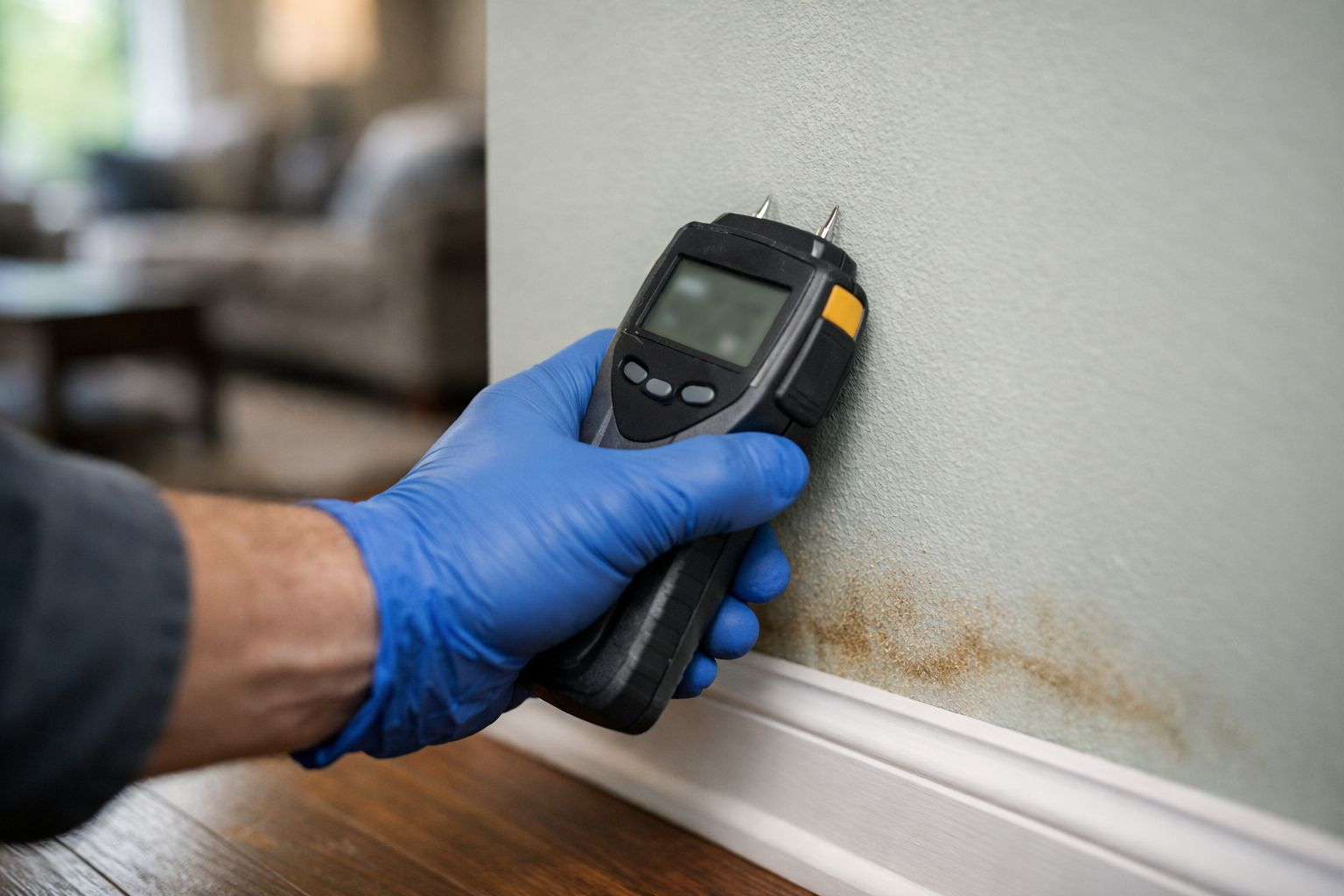
Moisture inspection — Marietta, GA
Had water in your home recently — and only ran fans? A moisture check now beats a mold job later. Call any hour; drying should start the same day as extraction.
Free estimates · Crews dispatched 24/7
📞 Call (678) 835-2797Get a Free Estimate
No obligation · Crews available 24/7
Takes 60 seconds · No obligation
Related Articles
Why Choose Us?
- 24/7 Emergency Dispatch
- Truck-Mounted Extraction
- Moisture-Metered Drying
- Insurance-Ready Documentation
- Free Estimates
- Serving Cobb County and Beyond