
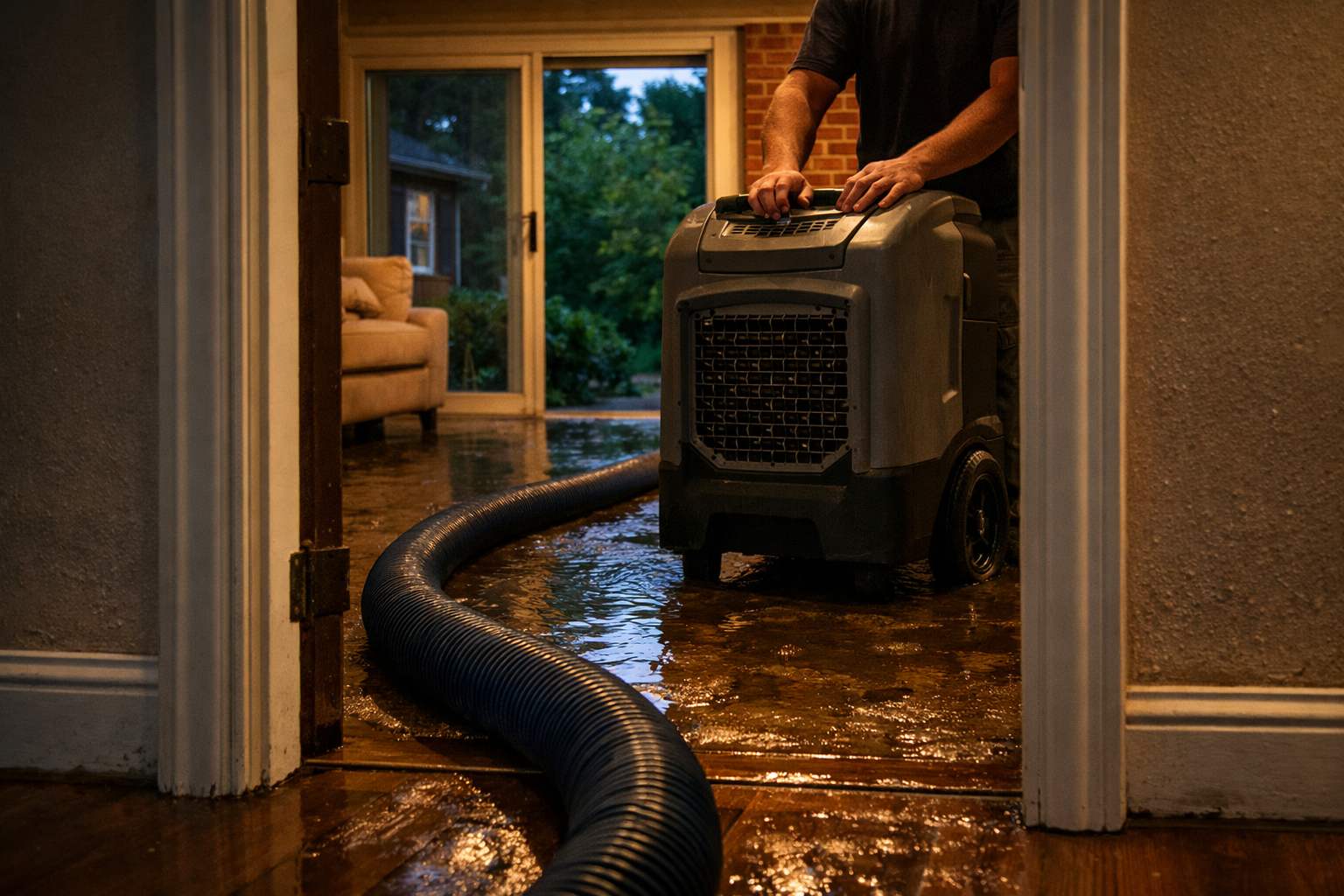
Flood Damage Cleanup in Marietta, GA
Flood damage cleanup is the removal, sanitizing, and drying that follows storm water or rising water entering a home — different work from a burst pipe, because flood water arrives contaminated and touches everything low in the house. Our Marietta crews handle flood cleanup 24/7, from the first extraction pass through documented dry-out.
Quick Answer
Flood damage cleanup in Marietta means extracting storm or rising water, removing what the water contaminated, sanitizing what can stay, and drying the structure to documented readings. Flood water is treated as contaminated, so it is not a pump-and-fan job. Call (678) 835-2797 at any hour and a crew is dispatched across Marietta and Cobb County.
Flood Water Is Not Pipe Water
Why the Source Changes Everything
Water that rises in from outside — an overwhelmed yard, a swollen creek, storm runoff pushing under a door — picks up soil bacteria, lawn chemicals, and street contaminants on the way in. Restoration standards treat it as Category 3 water, which means cleanup involves protective handling, disposal of saturated porous materials, and antimicrobial treatment — not just pumping and fans. A flood cleaned up like a clean-water leak leaves contamination sealed inside the rebuilt walls.
What Marietta Floods Look Like
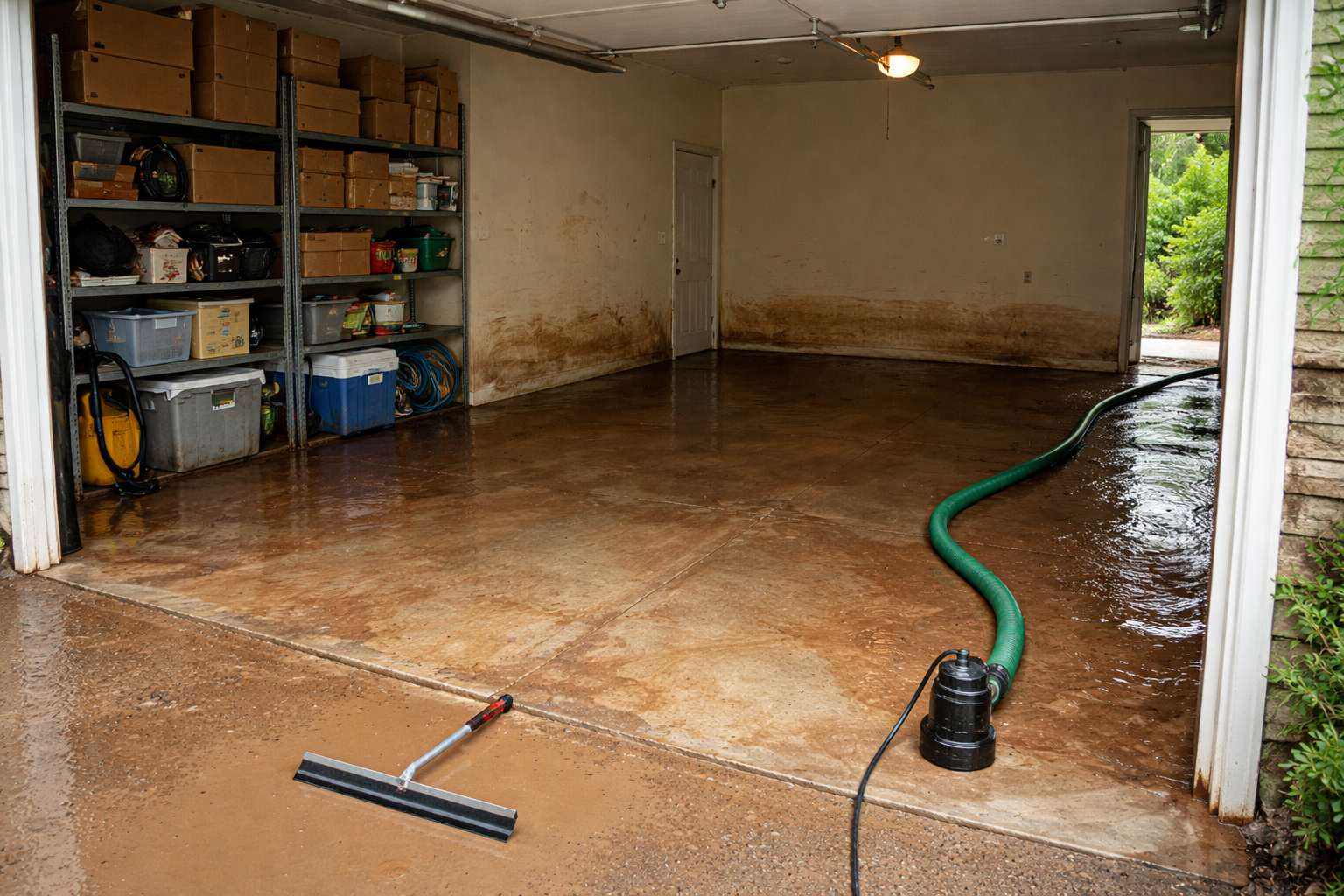
Cobb County's summer storm pattern — long humid build-ups breaking into short, violent downpours — overwhelms yard drainage fast. We see the same calls after every major cell: finished basements taking water at the walls, crawl spaces flooded under intact floors, garage and terrace-level intrusions on sloped lots, and creek-adjacent properties near Sope Creek and Rottenwood Creek catching runoff that had nowhere else to go.
Our Flood Cleanup Process
Safety First, Then Extraction
Flood scenes get a safety assessment before anything else — electrical risk, structural saturation, and contamination level. Then high-volume extraction: submersible pumps for standing depth, truck-mounted extraction for carpet and hard surfaces. Speed still matters enormously; the longer flood water stands, the deeper contamination migrates into materials that could otherwise have been saved.
Sort, Sanitize, and Dry
After extraction we sort save-versus-discard honestly, item by item — hard non-porous items usually survive with sanitizing, while saturated carpet pad, upholstery touched by flood water, and soaked lower drywall usually don't. Everything that stays gets antimicrobial treatment, and the structure goes onto a monitored drying plan with commercial dehumidifiers until readings hit documented dry standard.
Documentation for the Right Coverage
Flood claims live or die on documentation of the water's source and path. Rising outside water is generally a flood-policy matter, while wind-driven rain through storm damage may fall under homeowners coverage — and the difference is worth thousands. We photograph and log the entry evidence from the first hour so the right coverage gets applied to your loss.
What Shapes a Flood Cleanup Scope
Depth, Dwell Time, and What It Touched
An inch of storm water across a garage is a different job from a foot of creek water through a finished basement. Scope follows how deep the water got, how long it stood before extraction, and what it soaked — insulation, contents, HVAC ducts, and stored belongings all change the work. We assess on site and give you a clear scope before cleanup begins, never a sight-unseen number.
Preventing the Repeat
Once your home is clean and dry, we walk you through the entry evidence we found — grading that slopes toward the foundation, downspouts discharging at the wall, window wells without covers, or hydrostatic pressure through the slab. Cleanup is our job; making the next storm boring is the goal, and knowing the entry path is how you target the permanent fix.
Flood Cleanup, Flood Remediation and Storm Damage: Which One Do You Need?
Same Water, Different Words
Homeowners search for flood cleanup, flood remediation, flood restoration and storm damage restoration, and on a real job they overlap. Cleanup and remediation describe the same front-end work: get the water out, remove ruined materials, sanitize, dry. Restoration is the rebuild afterward. Storm damage is usually the cause, for example wind-driven rain through a failed roof or window, and it changes how your claim is handled more than how the water is removed.
Rising Water Versus Roof or Window Leaks
Water that enters at ground level from the yard or a creek is contaminated and usually lower in the house. Water that comes through a roof, vent or window during a storm starts higher and often saturates insulation, ceilings and upper walls before it reaches the floor. Tell the dispatcher which one you have; the equipment and the order of work are different.
Where Storm Water Gets Into Marietta Homes
Walk-Out Levels, Window Wells and Garage Slabs
On sloped lots across Marietta and East Cobb, storm runoff finds the low side of the house: a walk-out door threshold, a window well without a cover, or a garage slab that sits lower than the driveway. Water that enters there spreads under finished flooring and into the base of walls before it is visible from the middle of the room.
Crawl Spaces Under Older Homes
Older homes near the Square and along the older streets often sit on vented crawl spaces. After heavy rain the soil under the house can hold water against the subfloor and insulation for days. We check crawl space access and moisture readings as part of a flood assessment because floors that look fine can be wet underneath.
First Steps Before the Crew Arrives
What to Do and What to Skip
Stay out of standing water if the power is on or the water is touching outlets or appliances. Do not run a household vacuum or use fans plugged in over wet floors. Keep children and pets out of the affected area, lift small items to dry surfaces, and photograph the water line and damage before anything is moved. Call as soon as it is safe to do so.
Frequently Asked Questions
Is flood damage cleanup different from cleaning up a burst pipe?
Yes. Water that enters from outside is treated as contaminated, so porous materials it touched are usually removed rather than dried, and what stays gets sanitized. A clean supply-line leak is often a dry-in-place job.
Will homeowners insurance cover flood damage in Marietta?
It depends on how the water got in. Surface water and rising water are commonly excluded from standard homeowners policies and fall under separate flood coverage, while wind-driven rain through storm damage may be covered. Check your policy with your carrier; we document the entry points and damage either way.
Can anything in a flooded room be saved?
Often yes. Hard, non-porous items and solid wood framing usually clean up. Carpet pad, soaked lower drywall, insulation and upholstered items that touched flood water usually do not. We sort item by item and tell you why.
How soon should flood cleanup start?
As soon as it is safe. Contamination and moisture keep moving into materials while water stands, and mold risk grows after the first day or two. We dispatch around the clock and do not quote a clock time over the phone.
Do you handle flooded crawl spaces and garages, not just basements?
Yes. Crawl spaces, garages and walk-out levels all flood on sloped Cobb County lots, and each is extracted and dried differently.
Related Services and Areas We Cover
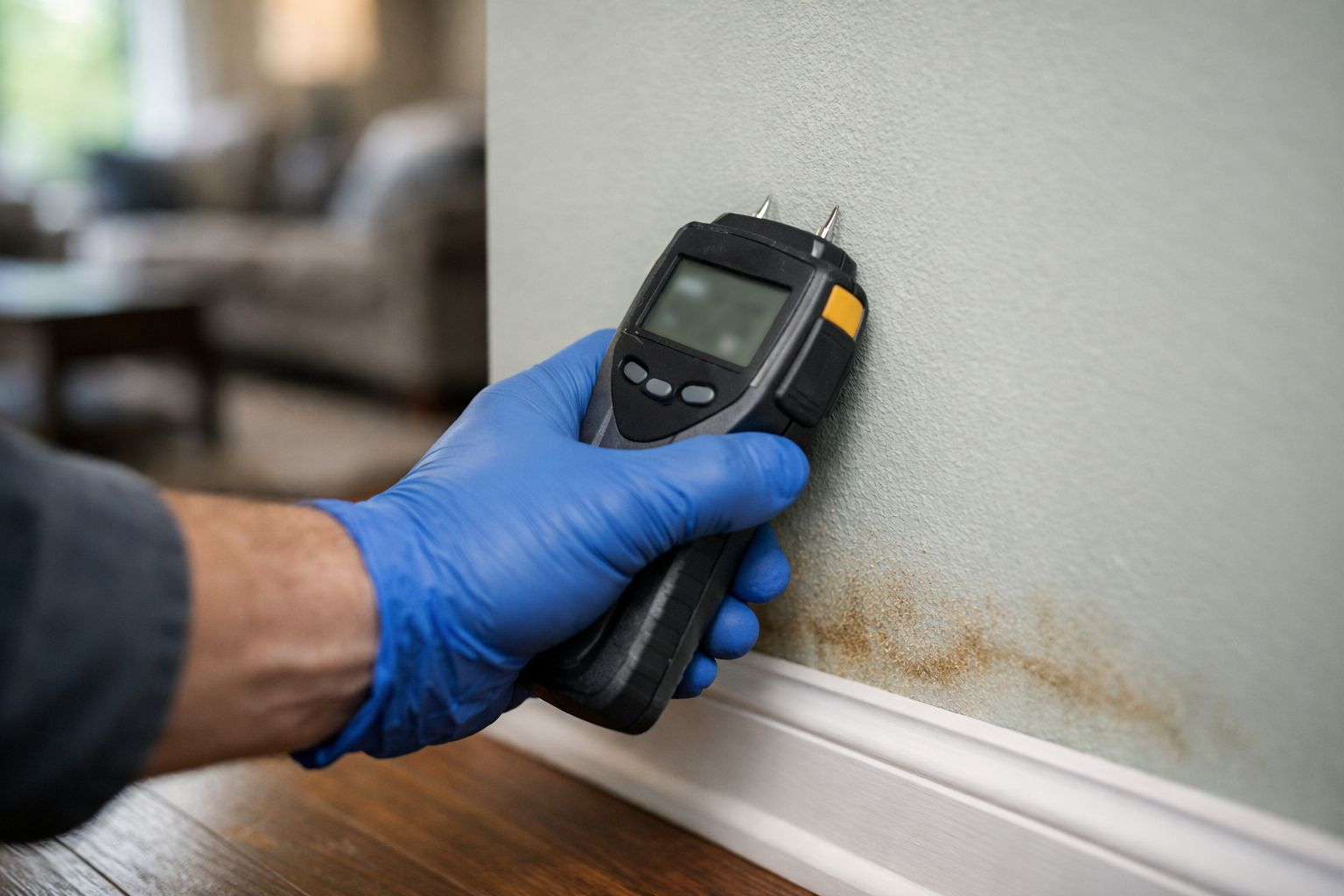
Moisture inspection — Marietta, GA
Storm water in your home right now? Don't wait for it to recede — contamination spreads while it stands. Call for 24/7 flood cleanup across Marietta and Cobb County.
Free estimates · Crews dispatched 24/7
📞 Call (678) 835-2797Get a Free Estimate
No obligation · Crews available 24/7
Takes 60 seconds · No obligation
Related Articles
Why Choose Us?
- 24/7 Emergency Dispatch
- Truck-Mounted Extraction
- Moisture-Metered Drying
- Insurance-Ready Documentation
- Free Estimates
- Serving Cobb County and Beyond